
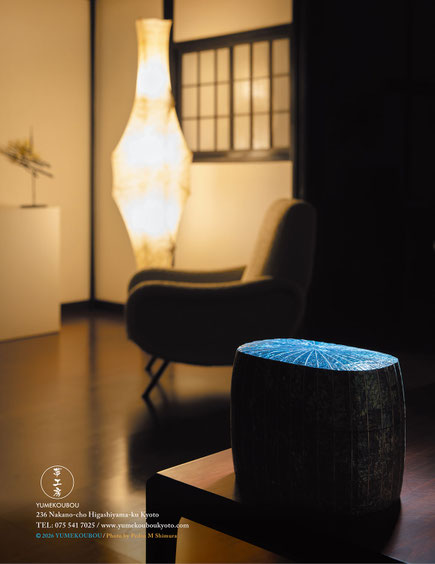
1月から2月にかけての京都。
冷えた空気の中、ときおり雪が舞い、街は静かな輪郭を取り戻していきます。
日が短くなり、人の気配が薄れるほどに、時間はゆっくりと沈んでいきます。
この季節は、外へ向いていた意識が、自然と内側へと向かうとき。
ものを見ること、感じること、その一つひとつが、少しだけ深くなります。
冬の京都の気配に寄り添うように、
京都店に展示している作品の中から、3点をご紹介いたします。
~ In a Quiet Season ~
Kyoto from January to February.
In the chilled air, snow occasionally drifts down, and the city gradually regains its quiet contours. As the days grow shorter and the presence of people thins, time itself seems to sink into a slower rhythm. This is the season when our awareness, once directed outward, naturally turns inward. To see, to feel—each act deepens, just a little.
In keeping with the atmosphere of winter in Kyoto, we would like to introduce three works from those currently on display at our Kyoto store.
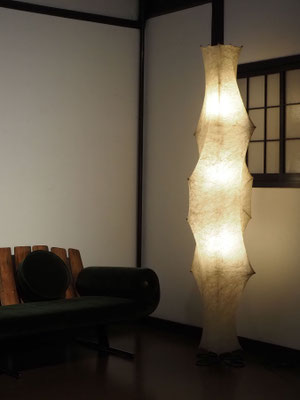
Fantasma Cocoon Floor Lamp
Afra & Tobia Scarpa for Flos
Italy, 1961
W47 x D47 x H183cm
やわらかな光が、空間に静かな呼吸をもたらします。Cocoonから放たれるその光は、和紙で作られた日本の行燈のようであり、明るさを与えるというよりも、人を含め、そこに存在するすべてのものを穏やかに一つにまとめあげる包容力を感じさせます。光は直接的ではなく、繊維を通して広がり、壁や床にあたたかな陰影を描き出します。高さのあるシンプルなデザインは、空間を圧迫せず、主張しすぎないフォルムでありながらも確かな存在感を放ちます。その佇まいは、時間の流れをゆるやかにほどき、言葉の少ない安らぎへと誘うもの。静謐さを求める現代的な空間に、深い余白と落ち着きを添えてくれます。
Soft light brings a quiet sense of breathing to the space. The light it emits recalls the atmosphere of traditional Japanese andon lanterns made of washi; rather than simply illuminating, it has a gentle, embracing quality that gathers together everything present in the space, including the people within it. The light is not direct, but spreads through the fibers, casting warm shadows across walls and floors. Though tall, its simple design does not overwhelm the room. With a form that avoids excess assertion, it nevertheless radiates a clear and confident presence. Its quiet stance gently loosens the flow of time, inviting a wordless sense of calm. It adds depth, stillness, and a generous sense of space to contemporary interiors that seek serenity.
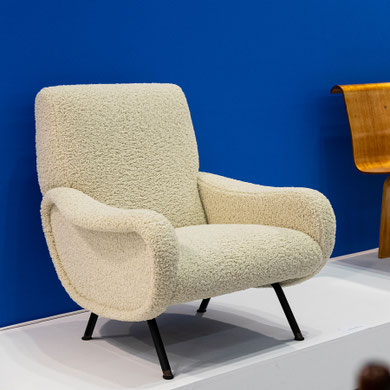
Lady Armchair
Marco Zanuso for Arflex
Italy, 1951
Brass, Iron, fabric
W76 x D81 x H86cm
無駄な装飾を削ぎ落とした、静かで確かな美しさ。このチェアは、モダンデザインの象徴として世界的に認知されてきた理由を、その佇まいそのものが物語ります。やわらかく心地よいファブリックの質感と、身体を包み込むような穏やかなフォルム。視覚的な軽やかさと、安心感のある座り心地が美しく調和しています。この椅子に身を預けることで、「座る」という日常の動作は、心を整えるひとときへと変わります。日々の時間に静かな豊かさをもたらし、何気ない瞬間を、少し特別な時間へと導いてくれる作品です。
Stripped of all unnecessary ornamentation, this chair embodies a quiet yet assured beauty. Its very presence speaks to the reason it has come to be recognized worldwide as an icon of modern design. The soft, inviting texture of the fabric and the gently enveloping form create a harmonious balance between visual lightness and a reassuring sense of comfort. When you settle into this chair, the simple act of sitting transforms into a moment of calm and reflection. It brings a quiet richness to everyday life, gently turning ordinary moments into something subtly special.
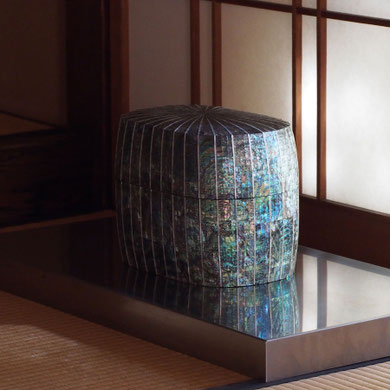
漆螺鈿手筥 / Lacquer and mother-of-pearl box
元堂 / Gendo
W25.5 x D16.5cm x H19.8cm
重要無形文化財保持者(人間国宝)である木漆工芸家・黒田辰秋への深いオマージュを感じさせる作品です。作者の詳細は明らかではないものの、漆工芸の伝統技法を真摯に受け継ぎ、さらに未来へと押し広げようとする強い意志が、この小さな造形のなかに凝縮されています。緻密に組み上げられた螺鈿細工は、単なる装飾にとどまらず、素材そのものの生命を呼び覚まし、光を受けるたびに表情を変える耀貝は、見る者の視線を静かに引き留めます。そこには、高度な技術への挑戦と、それを自らの手で成し遂げようとする覚悟を確かに感じることができます。この作品は、黒田辰秋が切り拓いた精神を敬意とともに受け取り、現代において改めて問い直す試みとして、静かに、そして雄弁にその存在を主張しています。
This work evokes a deep homage to Tatsuaki Kuroda, the master wood and lacquer craftsman designated as a Living National Treasure of Japan. Although the details of the artist remain unknown, a sincere commitment to inheriting the traditional techniques of lacquer craftsmanship—and a strong determination to carry them forward into the future—are condensed within this refined form.The meticulously assembled raden (mother-of-pearl inlay) transcends mere decoration, awakening the inherent vitality of the material itself. As it catches the light, the iridescent shell shifts its expression, quietly holding the viewer’s gaze. One can clearly sense both a challenge to attain a high level of technical mastery and the resolve to realize it through the artist’s own hands. Receiving the spirit pioneered by Tatsuaki Kuroda with profound respect, this work asserts its presence—silently yet eloquently—as an attempt to reexamine and reaffirm that legacy within a contemporary context.


